ServicesTile Roofing
Tile Roofing in Rossmoor, Checked Before We Quote
Most tile roofs fail underneath, not on top. We walk your roof carefully, lift tiles where it matters and show you photos of the underlayment, flashing and broken pieces. Then we tell you plainly whether you need a few repairs, a relay or a new roof.
What tile roofing work really involves
Concrete and clay tile can last for decades. The felt underneath usually doesn't. Years of sun dry it out, it turns brittle and cracks, and the water that slips past the tiles has nothing left to stop it. That's how a tile roof can look fine from the street and still leak into your home.
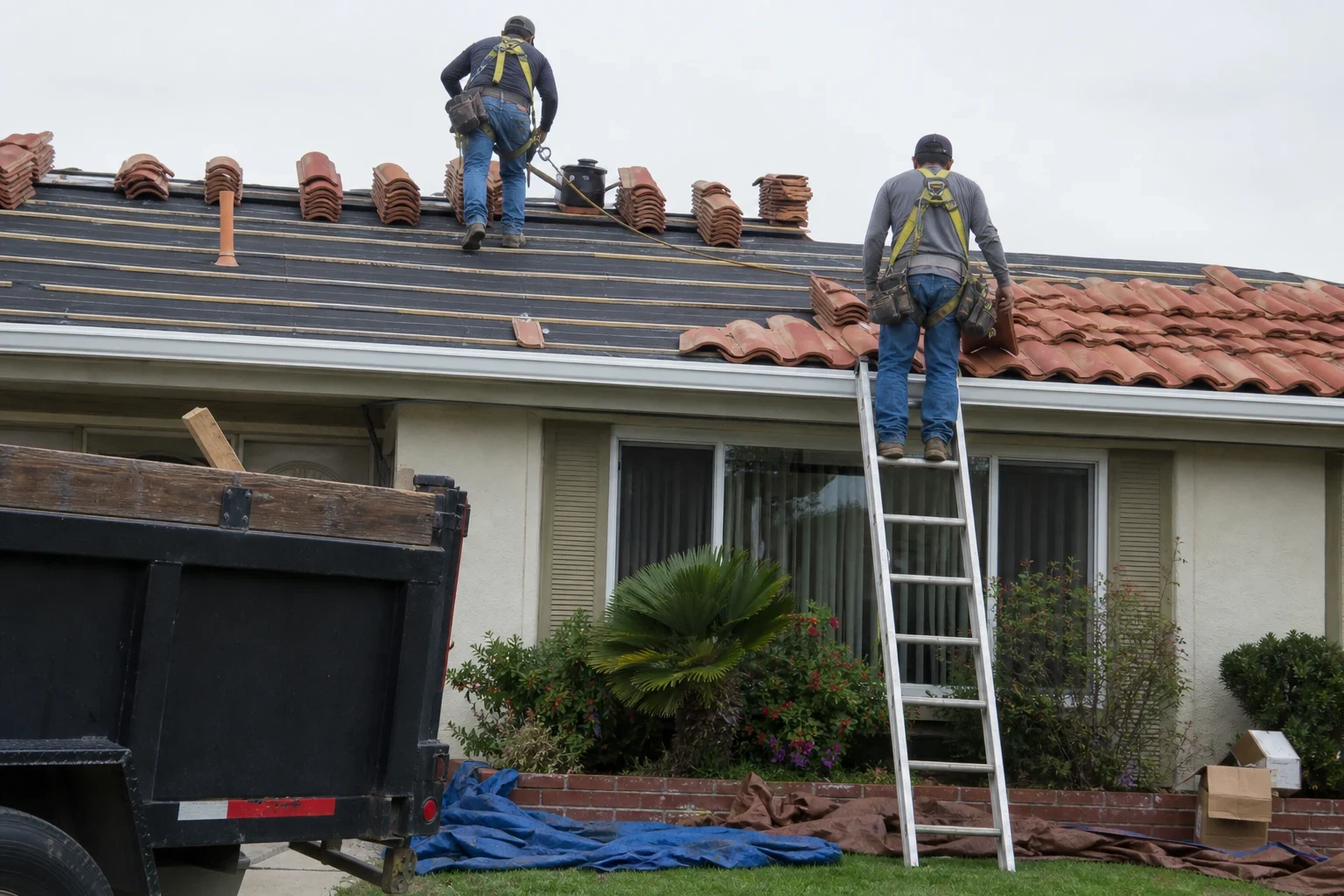
We handle tile repair, lift-and-relay jobs where we pull the tile, put down new underlayment and set your same tile back, and full tile roof replacement. Our owner has 40 years of roofing experience. That shows in small things, like knowing where to step so we don't crack more tile than we fix.
Every job starts with an inspection. You get the findings and the photos first. The recommendation comes after.
What our tile roof work covers
Broken and slipped tile
We replace cracked, slipped and missing tiles and match the profile and color as close as we can. If your tile is discontinued, we tell you up front. Sometimes we borrow matching pieces from a spot you'll never see and put new ones there.
Underlayment relay
We lift the tile, haul off the old felt, lay new underlayment and replace bad battens. Then we reset your tile. Your home keeps its look and the roof sheds water again.
Flashing and valleys
Valleys, chimneys, skylights and wall lines are where tile roofs leak most. We replace rusted or short flashing and clear valleys packed with leaves.
Ridge and hip caps
Old mortar at the ridge cracks and falls out. We reset ridge and hip tile so the caps sit tight and keep water and pests out.
Eave closures
Open gaps at the eaves let birds and rodents nest under the first row. We close them off with bird stops or eave closures.
New tile roofs
Tile is heavy, so we check the framing before anything else. If you're moving from shingles to tile, you'll know whether your structure can carry it before you spend a dime.
Signs your tile roof needs attention
- Stains after the first big rain
- Our rains come in a few heavy bursts each winter. A new ceiling stain after one of them usually means the underlayment has given out somewhere.
- Cracked or slipped tiles
- You can often spot them from the yard or a neighbor's driveway. One broken tile is a small fix. A row of them points to something underneath.
- Black, brittle felt showing
- Look at the eaves or under a broken tile. If the felt crumbles when touched, it's done its job and needs replacing.
- Mortar on the ground
- Chunks of gray mortar near the downspouts or in the gutters mean the ridge is coming loose.
- An old roof that's never been relayed
- If the tile is original and nobody has touched the underlayment, it's worth a look before it starts leaking.
How a tile roof job runs
- 1
A phone call
Tell us what you're seeing. We set up a free inspection at a time that works for you, in English or Spanish.
- 2
A careful inspection
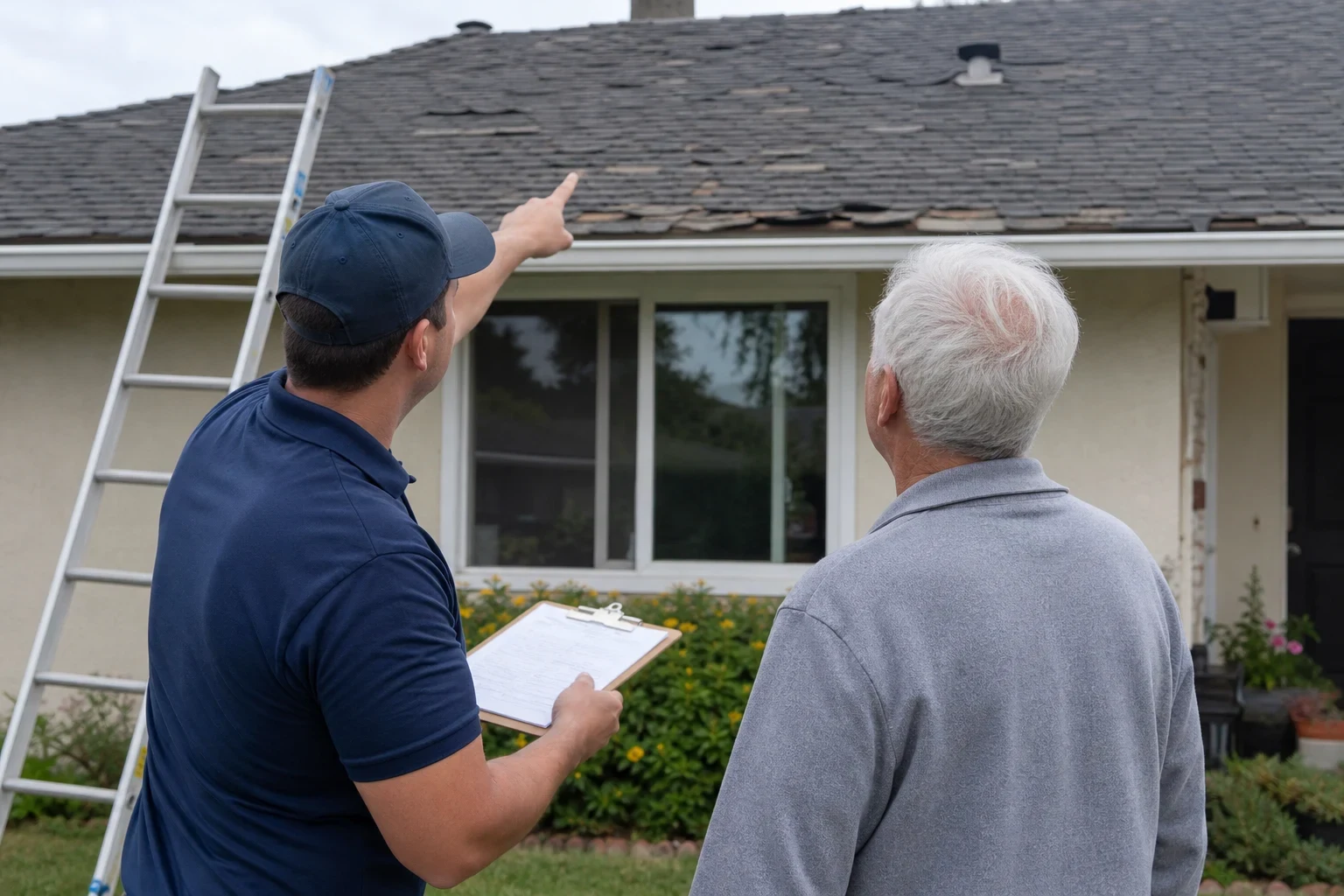
We walk the roof where tile can take weight, lift pieces at valleys and problem spots, and check the attic if we can. We photograph everything we find.
- 3
Findings you can see, then the estimate
Back on the ground, we sit down with you, show the pictures and explain whether repair, a relay or replacement fits your roof, and why. Your free written estimate lists every item on its own line. If a storm caused the damage, we work directly with your insurance claim.
- 4
Work day and cleanup
We protect your plants and walkways, stack removed tile safely on the roof and pull the permit when the job needs one. At the end we clean up broken pieces and debris and walk you through the finished work with photos.
What moves the cost of tile roof work
No two tile roofs price the same, which is why we inspect before we quote. The biggest swing is usually what's under the tile, not the tile itself. Financing is available through Service Finance Company, subject to credit approval.
- Repair, relay or replacement
- Swapping a few tiles costs far less than relaying a whole roof. A full replacement with new tile costs the most.
- How much tile can be reused
- Concrete tile often goes back on. Brittle old clay or discontinued profiles may need new or salvaged pieces, and that adds cost.
- Size, pitch and access
- Bigger and steeper roofs take more time and more care to stage tile safely. Tight side yards slow down material handling.
- What's under the felt
- Rotted battens, soft decking or rusted flashing get replaced once the tile is off. We show you photos before adding any of it.
Tile roofing questions we hear
- Can my existing tiles go back on?
- Often, yes. Concrete tile usually holds up well and gets reset after the new underlayment goes down. We expect some breakage and replace those pieces. Older clay can be more brittle, and we'll tell you honestly what we see.
- Should I repair or relay my tile roof?
- If the felt is still flexible and the problem is a few broken tiles or one bad valley, repair makes sense. If the felt is brittle across the roof, patching just moves the leak. We show you the felt in photos so you can see it for yourself.
- Won't walking on the roof break more tiles?
- It can, if weight lands on a tile with nothing backing it. Our crew keeps their feet over the battens and the overlaps, and moves slowly around older or brittle pieces. If something cracks during our work, we replace it.
- What underlayment do you use?
- We're a GAF Certified Contractor, and we talk through underlayment options with you during the estimate. The right choice depends on your roof's pitch and tile type. We'll explain the difference in plain words.
- How long does a relay take?
- It depends on the size of the roof and what we find under the tile. We give you a realistic schedule with your written estimate. Your home stays covered at the end of each work day.
Find out what's under your tile
We'll inspect your tile roof, show you the photos and tell you what it really needs. Se habla español.